
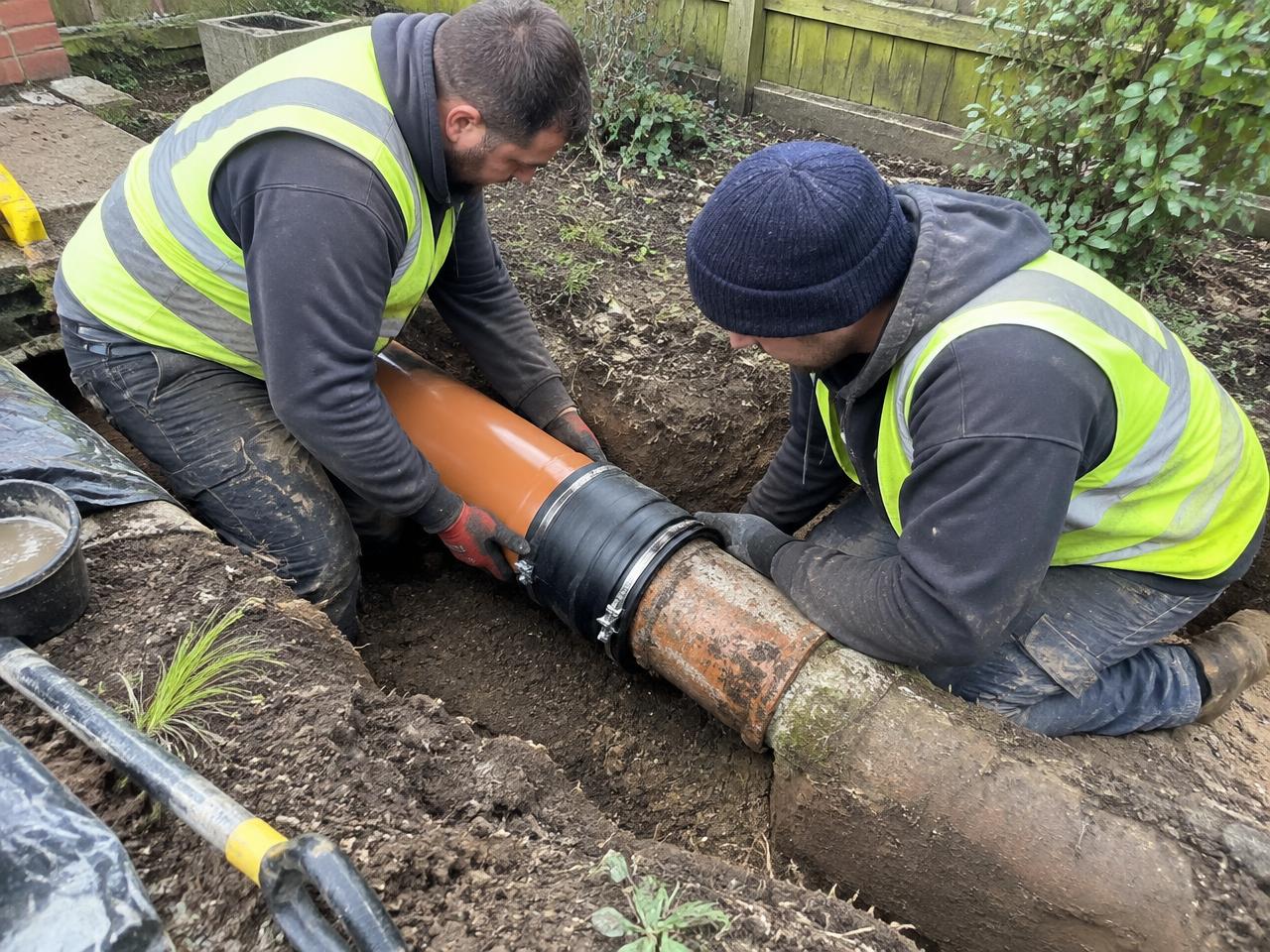
What a patch actually is
A patch is a short sleeve of glass fibre matting soaked in resin. It is wrapped around an inflatable packer, pushed along the pipe to the defect and then inflated so the sleeve presses tight against the pipe wall. The resin hardens in that position, leaving a rigid, sealed section bonded to the old pipe. Once the packer is deflated and pulled out, water flows through as normal.
Because it covers a short length, a patch suits a local problem. Where faults are spread along the run, a full liner is the better answer; our drain relining page covers that.
Patch or full liner: reading the footage
The decision comes from the survey. We look at how many defects there are, how far apart they sit, and the condition of the pipe between them. Two or three isolated cracks in a run that is otherwise sound can each take a patch. A pipe that is cracked every metre, or where joints are failing along its length, will just keep producing new problems next to each patch, so lining it all is more sensible.
We talk this through with you while looking at the footage, so you can see the defect being discussed rather than taking it on trust.
Getting the pipe ready
A patch will only bond to a clean pipe wall. Before it goes in, the drain is cleaned with high-pressure water jetting to strip off grease, scale and silt. Roots growing through a joint are cut back flush with a cutting head, and anything protruding into the bore, such as a badly made connection, is trimmed so the sleeve can sit flat. If roots are your problem, our guide to tree roots in drains explains why sealing the joint matters as much as cutting them out.
Putting it in the right place
Accuracy matters. The patch has to overlap sound pipe on both sides of the defect, so we measure its position from the access point with the camera and set the packer to match. A patch that is a few centimetres out can leave the edge of a crack exposed.
After the resin has cured, the camera goes back through. You see the finished repair, with the old defect covered and the edges of the patch sitting cleanly against the pipe.
Where patches are not the answer
A patch needs a pipe that still holds its shape and a wall sound enough to bond to. Heavily corroded or crumbling pipe gives the resin nothing reliable to grip. It is not suitable for a collapsed or flattened section, for joints that have slipped badly out of line, or for very tight bends where the sleeve cannot sit evenly. In those cases the length usually needs reforming and lining, or replacing; see collapsed drain repair.
Why the location gets recorded
We note how far along the run each patch sits and which access point it was measured from. The note goes into the footage we hand over, alongside the before and after views of the defect, so you have one clear account of the work. If anyone needs to survey, clean or connect into that drain in future, that record tells them exactly what they are looking at and avoids it being mistaken for a fault.
Ask about a patch repair
If you already have survey footage, mention it when you get in touch. Otherwise we can start with a camera inspection. Send us your details or ring 07799 153198. For coverage, see areas we cover.
Frequently asked questions
How long does a drain patch last?
A properly installed resin patch becomes a rigid, sealed section of pipe and is designed as a permanent repair to that defect.
Can a patch be fitted through a toilet or sink?
No. Patches go in through an inspection chamber or other access point on the underground drain.
Will a patch narrow my pipe?
Only very slightly, by the thickness of the sleeve. It does not affect flow in a normal household drain.
Can more than one patch go in the same run?
Yes. Several isolated defects can each be patched, although if there are many a full liner is usually better.
What if the survey finds more damage than expected?
We stop and talk it through with you before going further. A patch is only fitted where it is the right repair, and if a liner or replacement makes more sense we will explain why and show you on the footage.
Do I need to be at home during the repair?
Someone needs to give access to the chambers and avoid running water while the patch cures. We will explain timings beforehand.