Signs your drain is blocked
Most blockages announce themselves before they become an emergency. A sink that empties slowly, a toilet that rises when flushed, gurgling from the plughole or water pooling around an outside gully are all early warnings. Bad smells near a manhole or inspection chamber usually mean waste is sitting in the pipe rather than flowing away.
If more than one fitting in the house is affected at once, the problem is normally further down the line, in the shared underground pipework rather than the trap under a single sink. That is the point where shop-bought chemicals stop helping and a proper clearance is needed.
How we clear blocked drains
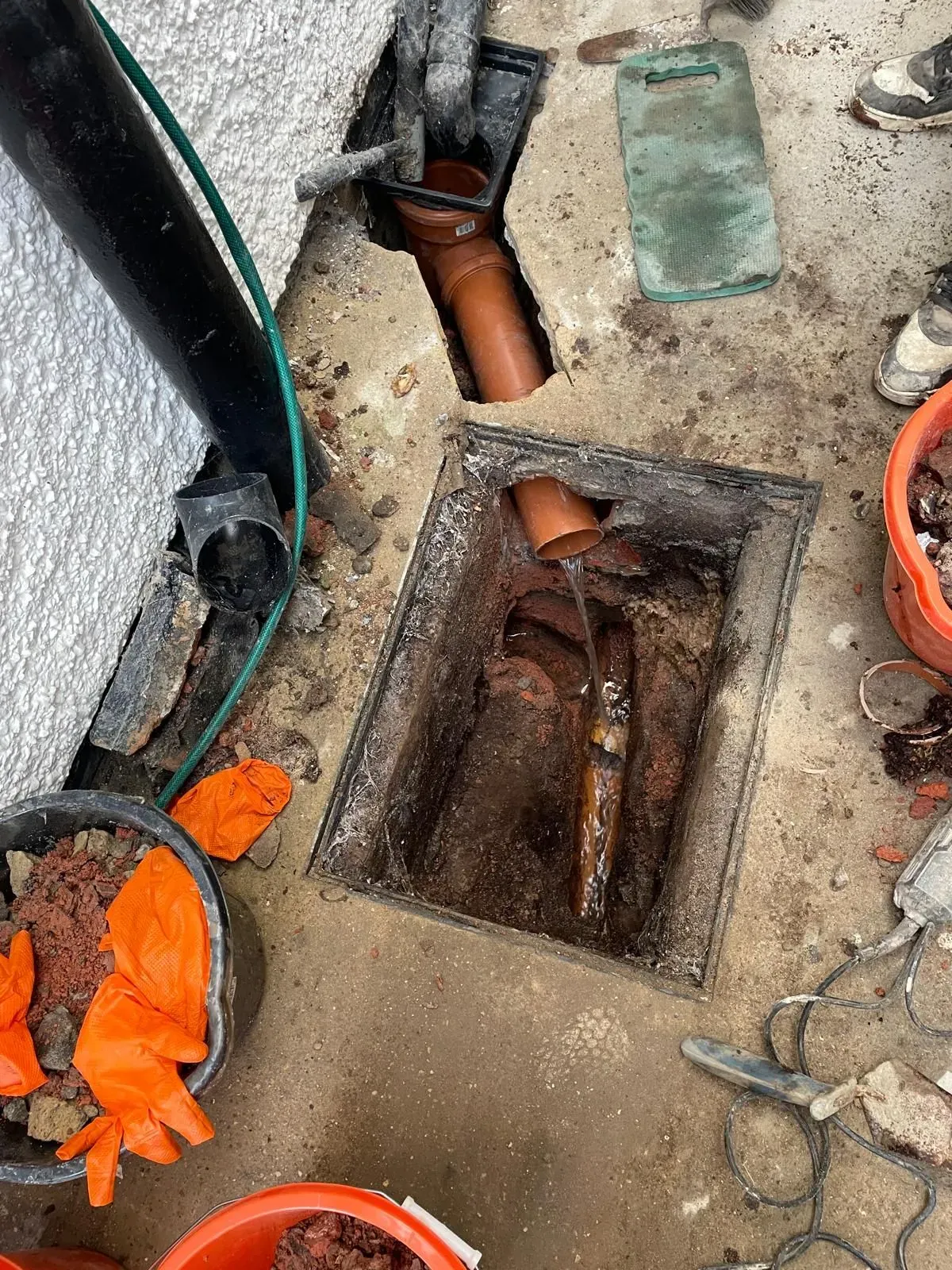
We start by finding where the blockage is. Lifting the nearest inspection chambers tells us which length of pipe is holding water, which saves time and avoids guesswork. From there we choose the right method for the job rather than using the same tool on everything.
High-pressure water jetting
Jetting breaks up fat, grease, wet wipes, silt and scale and flushes it through, leaving the bore of the pipe clean rather than simply punching a hole through the blockage.
Rodding and mechanical clearance
For short runs, internal waste pipes and stubborn compacted blockages, rods and mechanical tools can be the quicker and gentler option.
Camera check where needed
If a drain keeps blocking, we can put a CCTV camera down the line afterwards to see whether there is an underlying fault such as root ingress, a displaced joint or a collapse.
Common causes we find
In kitchens, the usual culprit is cooking fat that sets hard as it cools and catches everything that follows. In bathrooms it is wet wipes, sanitary products and hair. Outside, gullies fill with leaves and silt, and older clay pipes let tree roots in through the joints.
Repeated blockages in the same spot often point to a structural problem rather than bad luck. Rather than coming back to clear the same line every few months, we will tell you honestly if a survey or a repair would save you money in the long run.
Who we work for
We clear drains for private homeowners, landlords and letting agents, small commercial premises, shops and food businesses. Whether it is a single blocked toilet in a terraced house or a blocked shared drain serving several properties, the approach is the same: find the cause, clear it properly, and leave the site clean.
If you are not sure whether the blockage is your responsibility or the water company's, we can help you work that out on site, as shared sewers and lateral drains beyond your boundary are often looked after by the local water authority.
Before you call: useful reading
If the problem is outside, our guide to a blocked outside drain explains how to tell a gully from a main drain blockage and what is safe to do first. For a sense of what shapes the price of a clearance, read what it costs to unblock a drain. If the blocked pipe is shared with neighbours, it may not be yours to pay for; see who is responsible for drains.
Get a blocked drain cleared
Call George on 07799 153198 or send the quick form with your postcode and a short description of the problem. Photos of the affected sink, toilet or manhole help us give you a clearer idea of what is involved before we arrive.
Frequently asked questions
Can I clear a blocked drain myself?
A single slow sink can sometimes be freed with a plunger. If several fittings are affected or an outside chamber is full, the blockage is in the main pipework and needs proper equipment.
Will jetting damage my pipes?
Jetting is carried out at a pressure suited to the pipe material and condition. If a pipe already looks fragile, we will tell you before going ahead.
Why does my drain keep blocking?
Recurring blockages usually mean there is a fault in the pipe, such as roots, a dip or a cracked joint. A CCTV survey will show the cause.
Should I pour bleach or boiling water down a blocked drain?
No. It rarely shifts a real blockage, can damage plastic pipe and makes the job less safe for whoever clears it.
Is a blocked shared drain my responsibility?
Often not. Drains serving more than one property are usually the water company's. A quick check of where the blockage sits will tell you.