Faults that need remedial work
Many older homes still run on original clay drains with mortar joints. Over decades these joints fail, pipes crack under the weight of traffic or ground movement, and roots find their way in. Newer plastic systems can also suffer where they were poorly bedded or have been disturbed by later building work.
Left alone, a leaking drain can wash away the soil around it, contributing to sinking paving, damp walls and in some cases subsidence. It can also give rats a way into the property. Fixing the fault early is almost always cheaper than dealing with the damage later.
Our repair options
Every repair starts with a clear picture of the problem, usually from a CCTV survey. That tells us which approach suits the pipe, the depth and the ground above it.
Patch repairs
A resin-impregnated sleeve is cured in place over a single crack or failed joint, sealing it from the inside without digging.
Relining
Where damage runs along a longer section, a continuous liner creates a new pipe within the old one.
Excavation and replacement
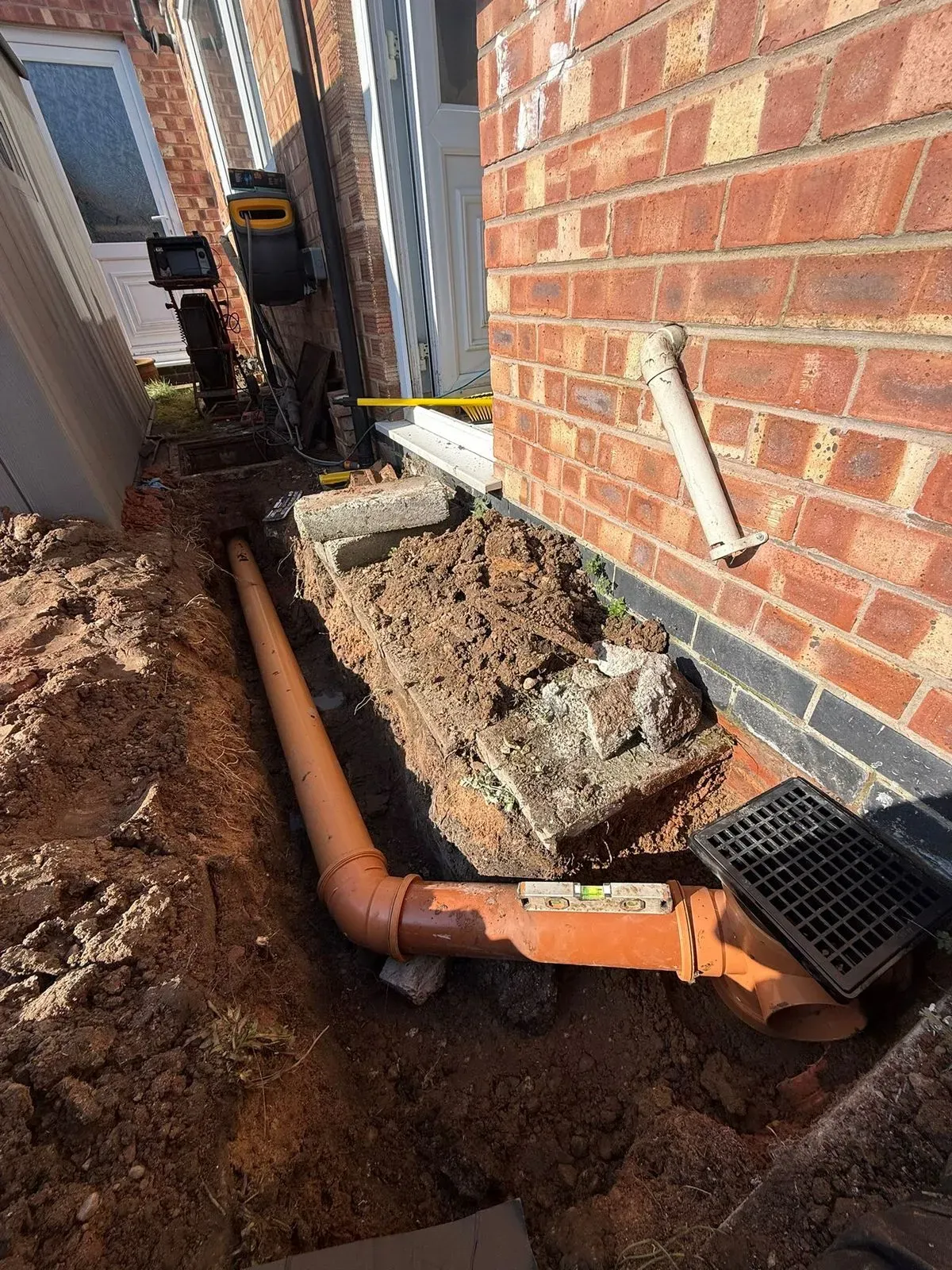
Where a pipe has collapsed or is badly out of line, we dig down, replace the damaged section with modern pipework and reinstate the ground.
Root removal
Roots are cut out mechanically before the affected joints are sealed to stop them coming back.
Working tidily on your property
Drain repairs often sit under driveways, patios, gardens or kitchen floors. We plan the work to keep disruption to a minimum, protect surrounding surfaces where we can and leave the area clean and safe at the end of each day.
Where excavation is needed, we will talk you through what will be lifted, how it will be reinstated and how long the job is expected to take before any work starts.
Insurance and landlord work
Some drain damage is covered by buildings insurance, particularly where it has been caused by accidental damage or root ingress. We can supply survey evidence and a clear description of the work to support a claim. For landlords and letting agents we can coordinate access with tenants and keep you updated throughout.
Which repair do I need?
The survey footage points to one of three routes. A single crack or open joint in a sound pipe usually suits a no-dig patch repair. Damage spread along a run that still holds its shape is a job for full relining. A pipe that has broken down, filled with soil or slipped badly out of line needs digging out; see collapsed drain repair.
For a plain-English look at what drives the price of each route, read our guide to drain repair costs. If rats are the reason you are here, our guide to rats in drains explains how a defect lets them in and why the repair matters.
It is common for one drain to need more than one type of repair: a patch near the house, for example, and a replaced section further along where the pipe has dropped. We explain each recommendation against the footage so you can see why it has been chosen, and we only suggest work on lengths that actually need it.
Talk to us about a repair
Call George on 07799 153198 or send the form with your postcode and a short description. If you already have survey footage or a report from another company, let us know and we can review it.
Frequently asked questions
Do all drain repairs need digging?
No. Many cracks and joint failures can be repaired from inside the pipe with a patch or liner. Excavation is used where the pipe has collapsed or is badly misaligned.
How do you decide which repair to use?
We base it on a CCTV survey showing the type, size and location of the damage.
Can you repair drains under an extension or driveway?
Often yes, using no-dig methods. Where that is not possible we will explain the options before any work starts.
Can you repair just one section of drain?
Yes. Most repairs deal only with the damaged length, whether that is a single patch or one replaced section.
Will my home insurance cover a drain repair?
Some policies do for accidental damage to underground pipes. Check your policy wording and ask your insurer before work is booked.
Do you test the drain after a repair?
Yes. Repairs are checked on camera before we leave, so you can see the finished work.