What people mean by a collapse
A crack is damage to the pipe wall; a full collapse means the pipe has lost its shape or broken apart. Between those extremes, fragments can fall inward, joints can shift and soil can enter the run. The term is sometimes used loosely, so ask what the camera actually shows rather than relying on the word alone.
Warning signs at the fittings indoors
When several sinks, a shower and the toilet become slow together, consider the common drain they feed into rather than treating each fitting as a separate fault. Gurgling can happen as air moves through restricted pipework. Water may rise at a lower fitting when something else is discharged, showing that waste is not travelling away normally.
Changes above the underground run
Dips in paving or ground that begins to sink may indicate that soil beneath has moved or washed away. Damp patches, persistent smells or water around a chamber can accompany a leaking or restricted drain. These observations have other possible causes too, so record where they appear and whether they coincide with drainage problems inside the building.
Rats or burrows near the route can also draw attention to broken pipework. A defect may offer an exit from the sewer into surrounding ground; the rats in drains guide explains that connection. Pest activity alone does not prove a collapse, but it can be part of the picture when it appears alongside repeated blockages or changes to the surface.
How a pipe loses its shape
Ageing joints and pipe walls can weaken, while ground movement can separate sections or disturb their support. Roots entering an existing gap may widen it as they grow. Heavy loads above a poorly supported or shallow run can also contribute to damage. The tree roots in drains guide looks at how root entry develops.
Use a camera to confirm the damage
A CCTV drain survey examines the accessible pipe and records defects. A camera with a locating sonde can relate the fault to its position and depth from the surface. If obstruction or standing waste prevents a view, clearing may be needed first; where the camera cannot pass a broken section, that limitation also matters to the investigation.
Match the repair to what remains
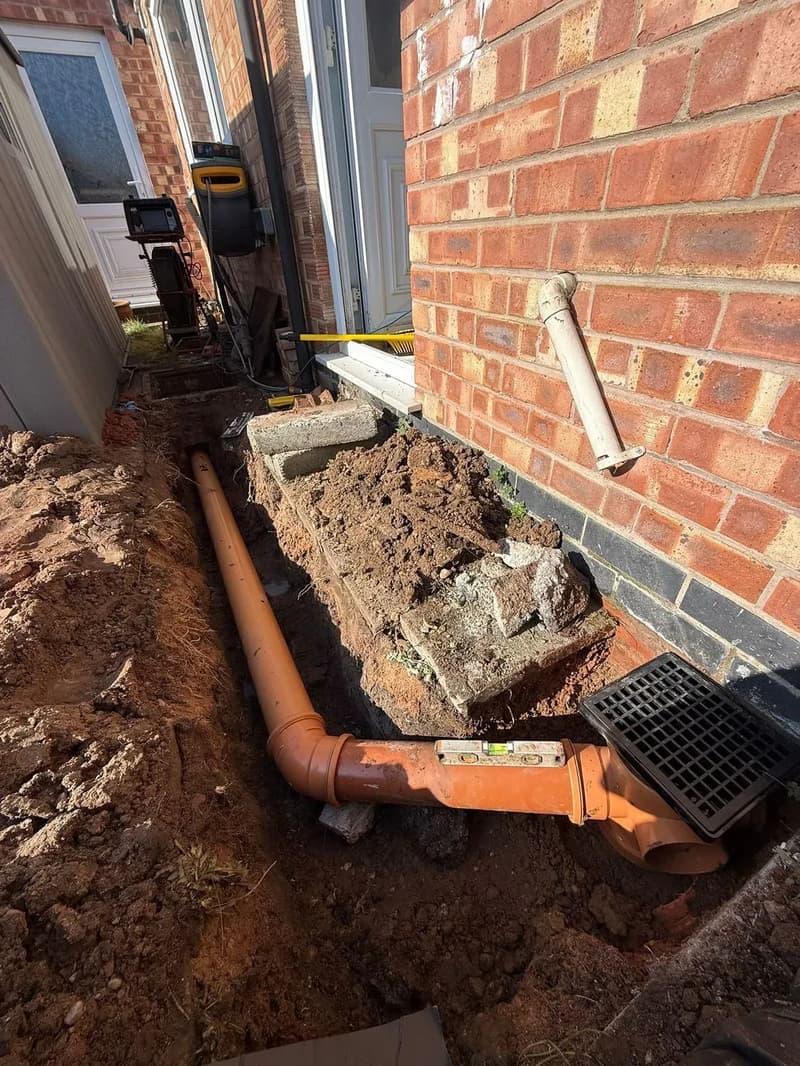
A local defect in a suitable pipe may be treated with a drain patch repair. Damage along a viable run may suit drain relining. Where the shape is gone or sections are badly displaced, drain excavation exposes the fault so damaged pipe can be removed and replaced. Access, depth and the condition found affect the work involved.
Check ownership before agreeing to the repair. A pipe under a neighbour's garden, or even your own, may serve several homes. Our guide to who is responsible for drains explains why location alone is not enough to decide who pays. The relevant water company or property manager can confirm responsibility where the arrangement is unclear.
Practical steps while arranging help
Limit water use if waste is backing up, and avoid running appliances that discharge into the affected system. Keep people and pets away from sewage or unstable ground. Do not stand on sinking paving to investigate, enter chambers or attempt to dig down to the pipe. Avoid adding chemicals to standing waste, which creates another hazard without fixing structural damage.
Call 0333 335 7414 with the symptoms and any recent changes. WhatsApp messages to 07428 535083 can include photographs taken from a safe position. You can also contact George with earlier survey information. Describe what you have observed rather than trying to diagnose the collapse yourself.
Want a professional to handle it?
Tell George about the problem using the enquiry form below.
Frequently asked questions
Can a collapsed drain fix itself?
No. Flow may temporarily improve if trapped waste moves, but broken or displaced pipe remains damaged. Inspection is needed to establish the fault and the suitable repair rather than treating that improvement as a cure.
Is a collapsed drain dangerous?
Leaking sewage and unstable ground can create hazards. Keep clear of affected surfaces and waste, reduce discharge into the drain and seek help. Never enter a chamber or open an excavation yourself to investigate.
How do you find exactly where it has collapsed?
Camera footage identifies the damaged section where access permits. A locating sonde helps relate that position to the surface and establish depth. Blockages or missing pipe can limit how far the camera travels.
Can a collapsed drain be relined instead of dug up?
If it has genuinely lost its shape, lining may not be possible. A cracked but still viable section is a different situation. The recorded condition decides whether internal repair or replacement is appropriate.
Who pays if the collapse is under a neighbour's garden?
It depends on ownership and which properties the pipe serves, not simply whose garden is above it. Shared sewers are usually the water company's responsibility. Check with the water company and the property owner before authorising repairs.